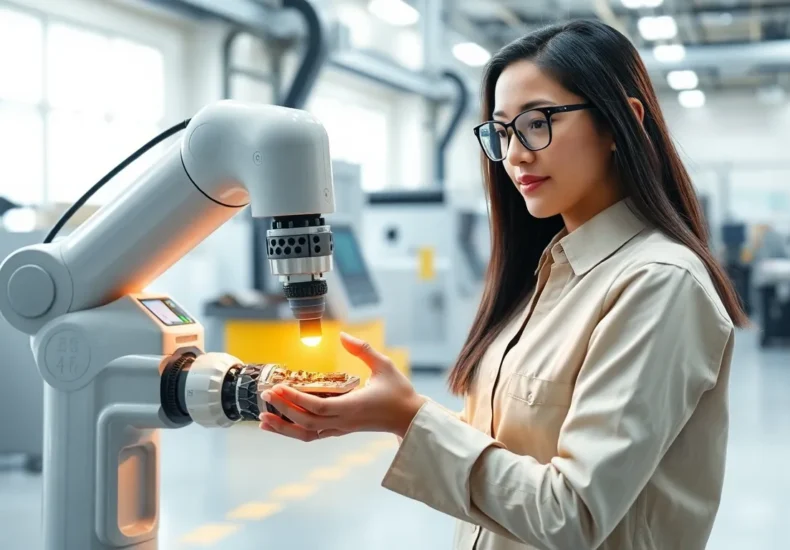
AI and Robotics: The Next Frontier of Automation
The assembly lines of the future won't just be faster - they'll be smarter, more adaptive, and in many cases, nearly autonomous. Artificial intelligence and robotics are converging in ways that are reshaping how we manufacture goods, deliver services, and even think about the nature of work itself. This isn't science fiction. It's happening right now in warehouses, hospitals, factories, and research labs around the world. The combination of AI's decision-making capabilities with robotics' physical precision is creating a new generation of machines that can learn, adapt, and perform tasks that once seemed impossible to automate.
TL;DR
- AI-powered robots can process massive amounts of data to make real-time decisions, dramatically improving efficiency beyond traditional programmed automation.
- Global robot density in manufacturing hit 162 robots per 10,000 workers in 2023, marking a significant shift toward automated production.
- The convergence of AI and robotics is enabling new capabilities like collaborative robots that work safely alongside humans and autonomous systems that adapt to changing conditions.
- Industries from healthcare to logistics are deploying intelligent robotic systems that can learn from experience and handle increasingly complex tasks.
How AI Transforms Traditional Robotics
Traditional industrial robots have been around since 1961, when the first Unimate robot was installed on a General Motors assembly line to handle spot welding. These early machines were incredibly capable at repetitive tasks, but they needed precise programming for every movement. Change the task, and you'd need to reprogram the entire system.
AI changes this fundamental limitation. When you combine machine learning with robotic systems, you get machines that can adapt to new situations without complete reprogramming. A robotic arm equipped with computer vision and AI can identify different objects on a conveyor belt, determine the best grip point, and adjust its movements based on the item's shape and weight. It learns from thousands of successful and unsuccessful attempts, refining its technique over time.
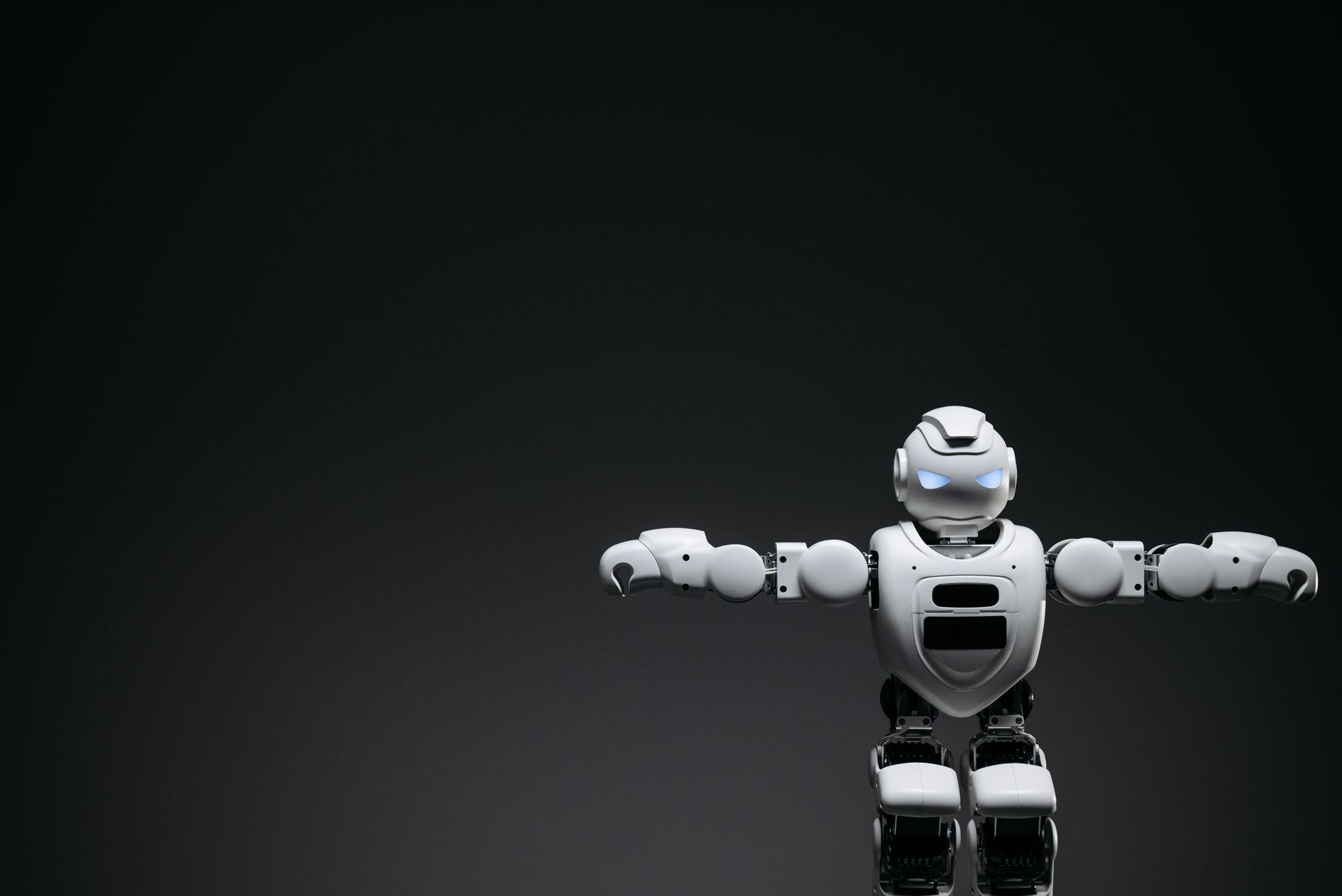
This learning capability opens doors that were previously closed. Consider quality control in manufacturing. An AI-powered vision system can inspect products at superhuman speeds, identifying defects that human inspectors might miss. But unlike traditional automated inspection systems that only catch pre-programmed flaws, AI systems can recognize anomalies they've never seen before by understanding what "normal" looks like.
The ability to process vast amounts of data quickly gives AI-driven robots another advantage. They can optimize their own performance by analyzing patterns in their work, adjusting speed, force, and positioning to minimize errors and maximize throughput. This self-optimization means these systems get better at their jobs the longer they operate.
The Rise of Collaborative Automation
One of the most significant shifts in modern robotics is the move toward collaboration rather than separation. Early industrial robots were caged off for safety - their strength and speed made them dangerous to be near. The new generation of AI-powered collaborative robots, often called cobots, are designed to work directly alongside people.
These systems use AI to understand their surroundings in real time. Sensors and computer vision allow them to detect when a human is nearby and adjust their behavior accordingly. They might slow down, change their path, or pause entirely to ensure worker safety. This makes them useful in environments where complete automation isn't practical or desirable.
In healthcare settings, collaborative robots are assisting with everything from surgery to patient care. Surgical robots guided by AI can make incredibly precise incisions while adapting to the slight movements of living tissue. Rehabilitation robots help patients recover mobility by providing exactly the right amount of resistance and support, adjusting in real time based on the patient's performance.
Pro Tip
If you're considering automation for your business, start by identifying tasks that are highly repetitive but require some level of decision-making or adaptation. These are the sweet spots where AI-powered robotics delivers the biggest return on investment compared to traditional automation or human labor alone.
Warehouses and distribution centers have become testing grounds for collaborative automation. Robots navigate crowded warehouse floors, avoiding human workers and each other while moving inventory. They communicate with management systems to optimize picking routes, predict maintenance needs, and coordinate with other robots to maximize efficiency. Amazon, for instance, uses thousands of mobile robots that work alongside human pickers, bringing shelves to workers rather than having workers walk miles through warehouses.
Lights-Out Manufacturing and Autonomous Operations
Some factories are now running what's called "lights out" operations - facilities that operate with minimal or no human presence. Robots can work continuously without breaks, fatigue, or the need for lighting, climate control, or other accommodations humans require. This doesn't just reduce labor costs; it can also save energy and allow for 24/7 production cycles that would be impractical with human workers.
But lights-out manufacturing only works when the robots can handle problems autonomously. This is where AI becomes essential. Traditional automation would halt at the first unexpected issue. AI-powered systems can identify problems, attempt solutions, and only alert human supervisors when they truly can't resolve an issue independently.
The automotive industry has been at the forefront of this shift. Modern car manufacturing involves incredibly complex coordination between hundreds of robots performing tasks from welding to painting to assembly. AI systems manage this choreography, adjusting workflows when delays occur, predicting when maintenance will be needed, and optimizing production schedules based on real-time conditions.
The word "robot" itself comes from a 1920 Czech play called "R.U.R." (Rossum's Universal Robots), where "robota" meant forced labor. That origin story feels relevant today as we grapple with what automation means for human work. But the reality is more nuanced than simple displacement. Many companies find that adding robots creates new roles for human workers in programming, maintenance, and oversight, even as it reduces the need for manual labor.
Beyond the Factory Floor
While manufacturing gets the most attention, AI and robotics are pushing into entirely new domains. Agriculture is being transformed by autonomous tractors and harvesters that use computer vision to identify ripe crops and AI to optimize planting patterns. These systems can work fields with precision that reduces waste and increases yields.
In logistics, autonomous delivery robots are navigating sidewalks and even flying through airspace. These aren't just following pre-programmed routes - they're making real-time decisions about navigation, avoiding obstacles, and adapting to weather and traffic conditions.
The service industry is seeing robotic systems in hotels, restaurants, and retail stores. Some handle simple tasks like vacuuming or inventory scanning, while others interact with customers, answer questions, and provide recommendations. The AI component allows these robots to understand natural language, recognize returning customers, and personalize their interactions.
Emergency response is another frontier. Robots can enter burning buildings, inspect unstable structures, or handle hazardous materials - situations where sending humans would be extremely dangerous. AI allows these robots to navigate complex, changing environments and make split-second decisions about the safest course of action.
Conclusion
The convergence of AI and robotics represents more than just incremental improvement in automation. We're watching the emergence of machines that can perceive, learn, and adapt in ways that were impossible just a few years ago. The global robot density in manufacturing reaching 162 robots per 10,000 workers in 2023 is just one metric of how rapidly this transformation is accelerating.
This shift brings legitimate questions about employment, safety, and the role of human workers in an increasingly automated world. But it also offers solutions to labor shortages, opportunities to eliminate dangerous jobs, and the potential to dramatically increase productivity and efficiency across countless industries.
The next frontier of automation isn't about replacing humans entirely. It's about creating systems where AI-powered robots handle tasks that are repetitive, dangerous, or require processing vast amounts of data, while humans focus on creativity, complex problem-solving, and the kind of nuanced judgment that machines still can't match. The factories, warehouses, and workplaces of the coming years will be collaborative spaces where human intelligence and artificial intelligence work together in ways we're only beginning to understand.
FAQs
What's the difference between traditional robots and AI-powered robots?
Traditional robots follow pre-programmed instructions and perform the same movements repeatedly without variation. AI-powered robots can learn from experience, adapt to new situations, and make decisions based on real-time data. For example, a traditional robot might stop working if an object is slightly out of position, while an AI-powered robot could recognize the object, determine how to handle it despite the displacement, and adjust its approach accordingly.
Will AI and robotics eliminate human jobs?
The impact is complex and varies by industry. While automation does reduce the need for certain manual labor positions, it also creates new roles in robot programming, maintenance, supervision, and system design. Many companies find that automation allows them to redeploy human workers to higher-value tasks rather than eliminate positions entirely. The challenge is ensuring workers have access to training and transition support for these new roles.
Are collaborative robots safe to work around?
Modern collaborative robots are designed with multiple safety features including force sensors, computer vision systems, and AI algorithms that allow them to detect and respond to human presence. They typically operate at slower speeds than traditional industrial robots and can stop or adjust their movements when someone enters their workspace. However, proper training and adherence to safety protocols remain essential for any human-robot collaboration.
