The Ultimate Guide to Lawn Care: Achieving a Lush, Green Lawn
A beautiful, healthy lawn doesn't happen by accident. It's the result of understanding what grass needs and delivering it consistently throughout the year. Whether you're dealing with bare patches, persistent weeds, or simply want that magazine-worthy green carpet, the principles remain the same: proper mowing, smart watering, timely fertilization, and knowing when to step in with targeted treatments. The good news? You don't need a degree in horticulture to get there. With the right approach and a bit of regular attention, transforming your lawn from patchy to pristine is entirely within reach.
TL;DR
- Mow at the right height with sharp blades, and change your mowing direction weekly to encourage thicker growth.
- Water deeply but infrequently to build strong root systems, and adjust your schedule seasonally.
- Fertilize strategically based on grass type and growing season, and address weeds, pests, and disease promptly with the right products.
- A healthy lawn can increase home value by 15% to 20% while producing enough oxygen daily to support a family of four from a 2,500-square-foot area.
Understanding the Foundation: Soil, Grass Types, and Seasonal Rhythms
Before you touch a mower or spreader, you need to know what you're working with. Your lawn's success starts underground. Healthy soil teems with life - one teaspoon can contain more living organisms than all the people on Earth. That biological activity breaks down organic matter, cycles nutrients, and creates the structure grass roots need to thrive. If your soil is compacted, depleted, or has poor drainage, no amount of surface-level care will deliver lasting results.
Grass type matters enormously. Cool-season grasses like Kentucky bluegrass and fescue thrive in northern climates and green up in spring and fall, while warm-season varieties such as Bermuda and zoysia dominate southern lawns and peak in summer. Each type has different mowing heights, watering needs, and fertilization windows. Trying to force the wrong grass into your climate or microclimate sets you up for constant struggle. Match your lawn to your region's conditions, and half the battle is already won.
Seasonality drives everything. In spring, cool-season grasses wake up and need nitrogen to fuel growth. Summer brings heat stress, requiring deeper watering and higher mowing. Fall is prime time for overseeding and fertilizing cool-season lawns, while warm-season grasses begin their dormancy. Winter means minimal intervention for most climates. Understanding this rhythm lets you work with your lawn's natural cycles rather than fighting them.
Mowing Strategies That Build Density and Resilience
How you mow shapes your lawn's health more than most people realize. Cut too short, and you scalp the grass, exposing soil to weeds and stressing the plants. Leave it too long, and you create thatch buildup and invite disease. The sweet spot depends on grass type: most cool-season varieties prefer 2.5 to 3.5 inches, while warm-season grasses do well at 1 to 2 inches. Grass grows from the bottom, which is why it recovers after mowing - but only if you're not removing too much at once.
Sharp blades make a massive difference. Dull mower blades tear grass instead of cutting cleanly, leaving ragged brown edges that lose moisture and become entry points for disease. You should sharpen blades at least twice per season, more if you mow frequently or hit rocks and debris. The investment in a sharp edge pays back immediately in the form of a healthier, greener lawn.
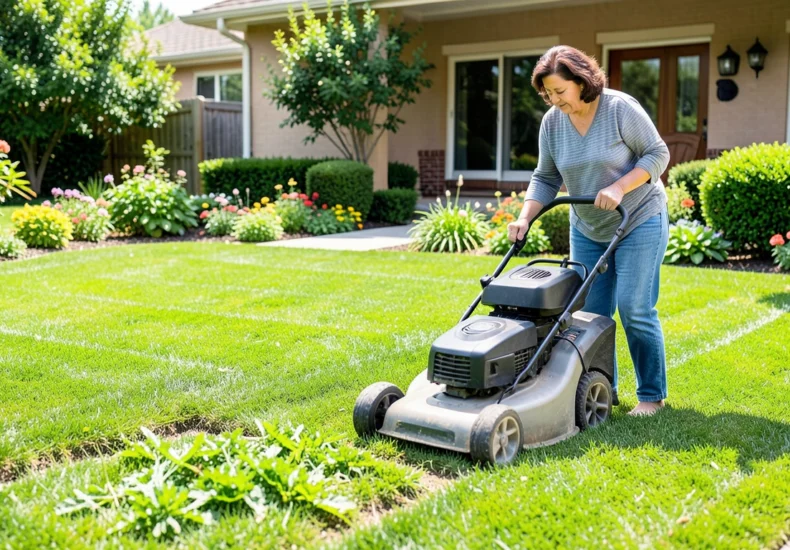
Here's a detail most homeowners miss: switching mowing direction weekly encourages thicker, lusher grass growth. Mowing the same pattern every time compacts soil along wheel tracks and trains grass blades to lean in one direction. Rotate your pattern - north-south one week, east-west the next, diagonal after that - and you'll see more upright, evenly distributed growth. It's a small habit with visible results.
Pro Tip
Never remove more than one-third of the grass blade height in a single mowing. If your lawn gets away from you and grows tall, bring it back down gradually over several mows to avoid shocking the plants.
Watering Wisdom: Deep Roots, Not Shallow Puddles
Most lawns are overwatered, which sounds counterintuitive until you understand root biology. Frequent, shallow watering trains grass roots to stay near the surface, where they're vulnerable to heat, drought, and foot traffic. Deep, infrequent watering forces roots to grow downward in search of moisture, creating a lawn that can weather stress without constant intervention. A grass blade is about 75-80% water, and clippings are about 90% water, but that doesn't mean you need to water daily.
The standard recommendation is about one inch of water per week, delivered in one or two sessions. On hot days, grass can cool an area by up to 30°C (54°F) compared to pavement, but that cooling effect depends on adequate moisture. Water early in the morning to minimize evaporation and give blades time to dry before nightfall, reducing the risk of fungal diseases. If you water in the evening, you're essentially inviting problems like brown patch and pythium blight.
Adjust your approach seasonally. In spring and fall, when temperatures are moderate and growth is active, you might need less supplemental water. Summer demands more, especially during dry spells. In late fall and winter, most lawns need minimal to no irrigation. Pay attention to rainfall and skip scheduled watering sessions when nature does the job for you. Overwatering wastes resources and weakens grass just as surely as underwatering does.
Fertilization, Weed Control, and Targeted Problem Solving
Fertilizer fuels growth, but timing and formulation matter. Cool-season grasses benefit most from heavy feeding in fall, with a lighter application in spring. Warm-season grasses want their nutrients in late spring and summer when they're actively growing. Nitrogen drives green color and density, phosphorus supports root development, and potassium improves stress tolerance. A balanced approach delivers all three without overdoing any single element.
Weeds are opportunists that fill gaps where grass is weak or thin. The best weed control is a thick, healthy lawn that crowds them out. When weeds do appear, proper identification determines your response. Broadleaf weeds like dandelions and clover respond to selective herbicides that won't harm grass. Crabgrass and other grassy weeds require pre-emergent treatments applied before seeds germinate, typically in early spring. Products combining fertilizer and weed control can handle both jobs in one pass, but timing is critical.
Brown spots, bare patches, and thinning turf signal specific problems. Grubs feeding on roots create brown patches that peel back like carpet. Fungal diseases show up as discolored rings, slimy patches, or powdery coatings depending on the type. Dog urine creates brown spots with green outer rings due to nitrogen overload in the center. Each issue has a targeted fix - grub control products for insects, fungicides for disease, repair mixes for bare spots. The average homeowner dedicates approximately four hours per week to lawn maintenance tasks during the growing season, and much of that time goes to diagnosing and addressing these localized problems.
The Environmental and Economic Case for Lawn Care
A healthy lawn isn't just aesthetic - it delivers measurable environmental benefits. Turfgrass is America's largest irrigated crop, surpassing corn, wheat, and soy, but it also produces oxygen at three times the efficiency of trees. A 2,500-square-foot lawn releases enough oxygen daily to support a family of four. Grass blades and roots trap and filter an estimated 12 million tons of airborne dirt, dust, and other contaminants annually across the United States, improving air quality in ways most people never think about.
The root systems of healthy turf prevent soil erosion - a critical function considering that approximately 25 billion tons of soil are lost to erosion each year, and rebuilding just one inch of topsoil takes approximately 500 years. Grass also filters rainwater, trapping pollutants before they reach groundwater, and absorbs runoff that would otherwise contribute to urban flooding. On hot days, a grassy lawn creates a natural cooling effect that can reduce surrounding temperatures significantly compared to asphalt or bare soil.
From a financial perspective, the numbers are compelling. A well-maintained lawn can increase a home's value by 15% to 20%, making it one of the highest-return landscaping investments you can make. Americans collectively spend nearly $30 billion annually on lawn care supplies, and about 22 million homeowners hire professional services. Whether you do it yourself or bring in help, the investment in a healthy lawn pays back in curb appeal, property value, and quality of life.
Conclusion
Creating and maintaining a lush, green lawn comes down to understanding the fundamentals and applying them consistently. Mow at the right height with sharp blades. Water deeply and less often. Feed your grass when it's actively growing. Address problems early with the right products. It's not complicated, but it does require attention to detail and a willingness to adjust based on what your lawn tells you. The average lawn contains millions of individual grass plants working together, and when you give them what they need, they respond with vigor.
The good news is that lawn care has never been more accessible. Whether you're working with hand tools or high-tech equipment, the principles remain the same. Start with good soil, choose the right grass for your climate, and follow a seasonal maintenance rhythm. The effort you put in today shows up in the density, color, and resilience of your turf tomorrow. A healthy lawn doesn't just look good - it cools your property, cleans the air, prevents erosion, and creates space for outdoor living. That's a return worth working toward.
FAQs
How often should I fertilize my lawn?
Cool-season grasses typically need fertilizer twice per year: a heavier application in fall and a lighter one in spring. Warm-season grasses benefit from feeding in late spring and again in mid-summer when they're actively growing. The exact schedule depends on your grass type, soil conditions, and local climate. Over-fertilizing can burn grass and contribute to thatch buildup, so follow product instructions and consider a soil test to determine actual nutrient needs.
What causes brown patches in my lawn and how do I fix them?
Brown patches can result from several causes: grubs feeding on roots, fungal diseases like brown patch or pythium blight, dog urine damage, compacted soil, drought stress, or even dull mower blades tearing the grass. Inspect the affected area closely - grub damage often allows the turf to peel back easily, fungal disease may show specific patterns or textures, and dog spots typically have a green ring around a dead center. Once you identify the cause, you can apply the appropriate treatment, whether that's a grub control product, fungicide, repair seed mix, or simply adjusting your watering schedule.
Is it better to water my lawn in the morning or evening?
Morning is the best time to water, ideally between 4 AM and 10 AM. This timing allows grass blades to dry before nightfall, reducing the risk of fungal diseases that thrive in prolonged moisture. Morning watering also minimizes evaporation loss compared to midday, when heat and wind can waste a significant portion of your irrigation. Evening watering leaves grass wet overnight, creating ideal conditions for problems like brown patch disease and pythium blight. If morning isn't possible, late afternoon is the second-best option - just make sure blades have time to dry before dark.
