Screen Free Rainy Day Activities Kids Actually Enjoy
When rain forces everyone inside, the reflex is to hand kids a screen and call it a day. But between the guilt and the inevitable screen-time meltdown later, there's a better way. Screen-free rainy day activities don't have to feel like punishment or require you to turn into a Pinterest-perfect parent. Kids actually enjoy plenty of things that don't glow, and many of them help develop skills screens never touch.
The challenge isn't finding activities. It's finding ones that hold attention for more than five minutes and don't leave you scraping glitter off the ceiling for weeks. The good news? Kids naturally gravitate toward hands-on, imaginative play when given the right prompts. Rain becomes an opportunity instead of an obstacle when you know what works.
TL;DR
- Building forts, puzzles, and board games keep kids engaged while developing spatial reasoning and social skills without screens
- Arts and crafts activities like homemade playdough and drawing stations let kids express creativity and strengthen fine motor control
- Reading aloud together and storytelling games expand vocabulary and foster imagination more effectively than passive screen time
- Physical activities like indoor obstacle courses and dance parties burn energy while improving coordination and balance
Classic Building and Construction Play
Building a blanket fort never gets old because it combines architecture, problem-solving, and a secret hideout all in one. Kids instinctively understand the appeal of a space they control completely. You don't need special equipment. Couch cushions, chairs, blankets, and clothespins create the framework. Flashlights inside make it more dramatic. Books stacked as anchors give walls stability.
What makes fort-building work as a rainy day activity is the process, not just the finished product. Kids negotiate where walls go, test whether structures hold, and redesign when things collapse. Building a blanket fort encourages creativity and imaginative play in ways that structured toys often don't. Once the fort is up, it becomes a stage for whatever comes next: reading corner, puppet theater, or quiet retreat.
Construction toys work similarly. Blocks, magnetic tiles, or even cardboard boxes and tape turn into cities, vehicles, or fantastical creatures. The open-ended nature means kids of different ages can participate. Younger ones stack and knock down. Older ones build complex structures with doors and moving parts. The repetition builds spatial reasoning without feeling like learning.
Puzzles and Games That Actually Hold Attention
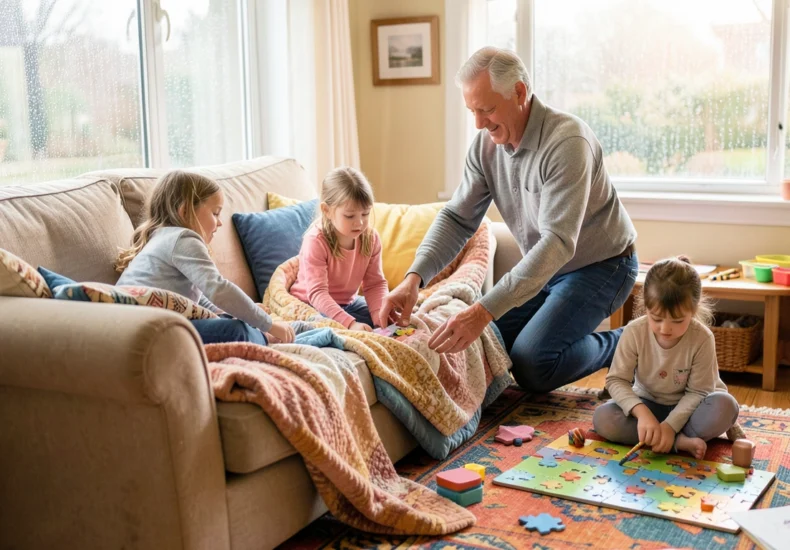
Puzzles get a reputation as quiet, solitary activities, but they work best as collaborative challenges. Dump a puzzle on the table, and kids naturally sort edges, group colors, and problem-solve together. Puzzles can help improve a child's problem-solving skills and spatial reasoning in tangible ways. You see it when a child rotates a piece, tries it in different spots, and finally clicks it into place. That moment of recognition builds patience and persistence.
The key is matching puzzle difficulty to attention span. Too easy and kids lose interest in minutes. Too hard and they quit in frustration. Age guidelines on boxes help, but you know your kid better than a manufacturer does. Floor puzzles work for younger children who need larger pieces. Older kids might tackle hundreds of pieces over several rainy days, returning to the puzzle between other activities.
Board games offer different benefits. They teach turn-taking, strategy, and handling disappointment when you lose. Board games offer opportunities for social interaction, teaching children about taking turns and good sportsmanship in low-stakes environments. Games with movement components, like charades or Simon Says variations, work especially well when kids need to burn energy. Card games like Go Fish or Uno don't require reading, making them accessible for younger players while older siblings stay engaged.
Pro Tip
Keep a rotation of puzzles and games stored out of sight, bringing them out only on rainy days. This makes them feel special rather than routine, and kids stay more engaged with activities they haven't seen in weeks.
Arts, Crafts, and Creative Expression
Arts and crafts have a messiness problem, which is why many parents avoid them. But the mess matters less when everyone's stuck inside anyway, and the payoff in focused attention is real. Drawing, painting, and coloring let kids express ideas that don't have words yet. You don't need expensive supplies. Paper, crayons, markers, and scissors cover most projects.
Playdough ranks high because kids can make it from scratch with flour, salt, water, and food coloring. The making process is half the activity. Once it's ready, they sculpt, flatten, cut shapes, and start over endlessly. It develops fine motor skills through squeezing, rolling, and pinching. Unlike screens, playdough gives tactile feedback that strengthens hand muscles needed for writing later.
Collage projects work well for mixed ages. Younger kids tear and glue magazine pictures. Older ones create thematic compositions or abstract designs. Nature collages using leaves, twigs, and flowers collected before the rain hit bring the outside in. Paper plate crafts, toilet paper roll sculptures, and sock puppets transform household items into art supplies. The goal isn't museum-quality work. It's sustained engagement and the pride kids feel when they've made something from nothing.
Reading, Storytelling, and Word Play
Reading aloud together can boost a child's vocabulary and foster a love for literature that screens don't replicate. The difference is interaction. When you read together, you stop to discuss pictures, predict what happens next, or explain new words. Kids ask questions. You change voices for different characters. This back-and-forth builds language skills and comprehension in ways passive watching never achieves.
Let kids choose books, even if they pick the same ones repeatedly. Repetition builds comfort with language patterns and lets them anticipate what comes next. Chapter books work for older kids who can handle longer narratives. You read a chapter, discuss it, and leave them wanting more. This delayed gratification teaches patience better than clicking to the next episode.
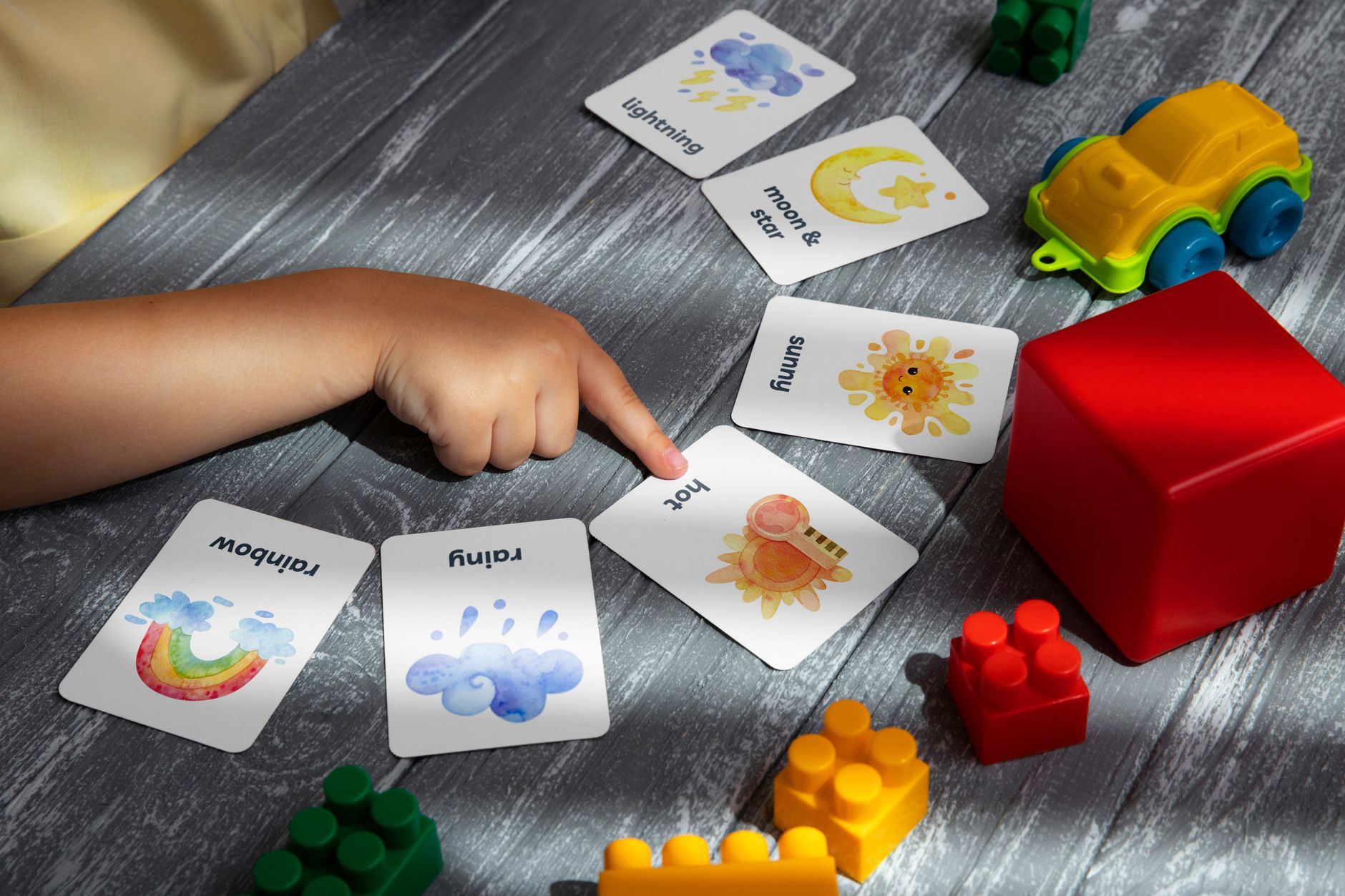
Storytelling games extend reading into active creation. Story cubes (dice with pictures) give random prompts. Kids create tales connecting the images. Round-robin stories where each person adds a sentence build collaborative narratives that get wonderfully weird. Older kids write and illustrate their own books, stapling pages together and reading them aloud. Audio stories work too, especially dramatic ones, but choose versions that require listening rather than watching. The goal is engaging imagination, not just filling time.
Physical Activities That Work Indoors
Kids need to move, rain or not. Indoor obstacle courses use furniture, pillows, and tape to create paths. Crawl under the table, jump over the pillow pile, balance on the tape line, touch the wall, and repeat. Time them and let them try to beat their record. This burns energy while improving coordination and balance.
Dance parties with favorite music get everyone moving. Add freeze dance rules where kids stop when music pauses. Younger children love animal movement games: hop like a bunny, slither like a snake, stomp like an elephant. Balloon volleyball works indoors because balloons move slowly enough to control. Rules about keeping the balloon in the air and not touching furniture turn it into a genuine game.
Yoga and stretching offer calmer physical activity. Kid-focused videos exist, but you can lead simple poses without screens. Tree pose, downward dog, and butterfly stretches make kids giggle while building body awareness. Follow active time with quiet activities to help kids regulate energy levels throughout the day.
Conclusion
Screen-free rainy days aren't about deprivation. They're about rediscovering activities that engage different parts of a child's developing brain. Building, creating, reading, and moving offer sensory experiences and social interactions screens can't match. Kids develop spatial reasoning through puzzles, fine motor skills through crafts, vocabulary through reading, and social skills through games.
The real win isn't keeping kids entertained for a single rainy afternoon. It's building a toolkit of activities they return to independently. When kids know how to entertain themselves without screens, rainy days become easier for everyone. You don't need elaborate plans or expensive supplies. You need blankets, books, paper, and permission to make a mess. The activities that work best are often the simplest ones, repeated and refined until kids make them their own.
FAQs
What age groups work best for screen-free rainy day activities?
Most screen-free activities adapt across ages with minor modifications. Toddlers through early elementary kids engage most naturally with hands-on activities. Adjust complexity rather than changing activities entirely. Younger kids use larger puzzle pieces and simpler crafts, while older kids handle detailed projects and complex games. Mixed-age siblings often play together successfully when activities allow different skill levels, like fort building where older kids engineer structures and younger ones decorate.
How do I transition kids away from screens on rainy days without tantrums?
Set expectations before rain arrives rather than reacting in the moment. Talk about rainy day plans when weather is nice, so rules aren't a surprise. Start with high-engagement activities like fort building or a special craft project rather than announcing screen time is over. Transition gradually if needed: one hour of screen time, then switch to activities, rather than going cold turkey. Once kids are engaged in hands-on play, they often forget about screens naturally.
What supplies should I keep on hand for spontaneous rainy day activities?
Stock a dedicated bin with basics: paper, crayons, markers, glue sticks, scissors, playdough ingredients, puzzles, board games, and a blanket fort kit with clothespins and clips. Rotate in new items seasonally to keep things fresh. Save cardboard boxes, toilet paper rolls, and egg cartons for craft projects. Keep a shelf of books kids haven't seen recently. Having supplies ready eliminates the barrier of needing to prep, making it easier to start activities when rain hits unexpectedly.
